How to Craft Your Social Media Content That Engages, Ranks, and Converts
Before you can make social media content that really works, you need to know your audience what they care about, what they’re looking for, and what kinds of posts make them stop scrolling. Knowing this makes it much easier to write content that seems important and relevant. Next, make sure each post has a reason for being there. Some posts should help you meet new people, some should strengthen your relationship with your current followers, and some should encourage them to act.
Why Social Media Content Matters
Social media used to be a simple way to talk to people, but now it’s a powerful tool for brands, businesses, and creators. It’s not enough to just post news anymore. You need to make content that reaches your audience, keeps them interested, and turns followers into loyal customers.
Every day, billions of people post on Instagram, Facebook, TikTok, LinkedIn, YouTube, and Pinterest. A few of these really get people’s attention. Good content is different from bad content because it has a plan, is creative, and understands how people think.
Well-made content for social media:
- Gets people’s attention right away
- Gives something useful or fun
- Promotes interaction (likes, comments, and shares)
- Moves people to do things, like click and convert
This blog’s goal is to help you write content that does all of these things, with examples of very interesting posts and useful tips for 2025.
Step 1: Know Your Audience
To make a successful social media content strategy, you need to know a lot about your target audience. When you know who you’re talking to, what they care about, how they act online, what problems they have, and what drives them, the content you make is more focused, relevant, and useful. What you know about your audience affects your tone of voice, how you send messages, which platforms you use, how often you post, what kinds of content you make, and what your campaign goals are. Even the best-made content can fail if you don’t know who your audience is. People who use social media are more likely to interact with content that speaks to their needs or interests. This is why knowing your audience’s demographics, interests, problems, goals, and emotional triggers is the most important part of any content plan that works well.
Important things to do to get to know your audience:
- Make audience personas: Include both demographics (age, location, job) and psychographics (interests, values, problems).
- Look at your competitors: Look at what kinds of content work for brands like yours.
- Use tools for analytics: Instagram Insights, TikTok Analytics, and LinkedIn Analytics are some platforms that show how people interact with your content.
Example:
- “Patagonia’s social media posts are aimed at people who care about the environment. They talk about activism, eco-friendly practices, and sustainability. This fits with what followers believe in, which makes them more likely to engage.
- “Duolingo” is another example of a company that knows that younger people like to learn and laugh. They share memes, educational games, and fun videos that are specific to each platform. Duolingo always gets a lot of engagement because it knows what its users want.
Step 2: Define Your Content Purpose
Content on social media can serve many purposes, but not all of them should try to do them all at once. Some content is made to reach new people and get more attention. Some content makes relationships with current followers stronger. Other content gets people to buy things, ask questions, or make leads. When you try to combine all of these goals into one piece, the message gets lost and the content doesn’t work. A strategically balanced content mix has ranking content, engaging content, and converting content, each made with a specific goal in mind.
It’s usually easier to find and share material that has been ranked. Getting more people to view your posts and follow you is all about employing the proper keywords, descriptions, formats, designs, or hashtags. On the other hand, fascinating material is supposed to strengthen your relationship with your current audience. People often talk about or feel something when they read this kind of content because it offers tales, insights, audience involvement, or experiences that they can relate to. Content that is geared to convert is more straightforward and focused on earning sales. It tells people what your product or service can accomplish for them, shows them results, gives them social proof, and pushes them to book, buy, join up, or message your business. You can create a healthy ecosystem that guides your audience through every phase of the content journey by giving each article a defined purpose.
Three key purposes of content are to reach people, get them to interact with it, and get them to buy something. Your outcomes might not be evident if you don’t know what you want to do.
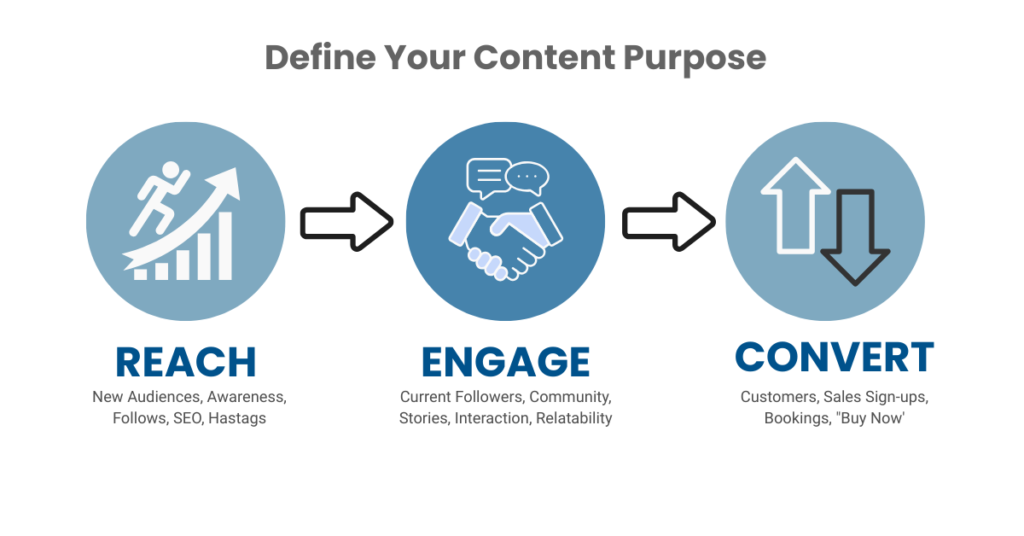
- Reach: Posts that are meant to get new people to see them. For example, Instagram reels that use popular songs or TikTok challenges.
- Engagement: Posts that make your current followers feel more connected to you. Nike’s athlete stories are an example of something that inspires and gets people talking.
- Conversion: Posts that are meant to get people to do something. For example, Glossier posts reviews from customers to get people to buy.
Example of a combined approach:
When “Nike” posts a motivational story about an athlete who overcame obstacles (engagement), subtly shows off Nike products (conversion), and uses popular hashtags to reach more people. This method makes sure that the content does well on a number of metrics.
Step 3: Choose the Right Platforms
Not every platform is meant for the same thing, and people don’t act the same way on every platform. Choosing the right platform for your brand makes it easier for your content to do well. Every social network has its own way of doing things, its own types of content, and its own ways of getting people to interact.
If you pick two or three platforms instead of trying to be active on all of them, you’ll be able to use your time, creativity, and resources more effectively. When you know the culture of a platform, you can make sure that your content fits with what the audience expects. This will help it reach more people and get more people to interact with it. Not every brand works with every platform. Choosing the right platforms makes sure that your content gets to the right people in the right way.
Platform Strategies:
- Instagram: Instagram is very visual and likes reels, carousel posts, and stories.
- TikTok: Short, trend-based, and funny videos do best on TikTok.
- LinkedIn: Case studies, professional insights, and thought leadership all do well.
- YouTube: Great for long tutorials, reviews, and educational videos.
- Pinterest: Pictures that last forever and ideas for living well work best.
Example:
“Duolingo” makes its content fit each platform: funny memes on Instagram, challenges based on current events on TikTok, and short educational tips on Twitter. This strategy for each platform gets people interested in many different ways.
Step 4: Using SEO Principles & Hashtags
SEO isn’t just for blogs and websites anymore. Today, most major social media sites recommend content to users based on keywords. This change means that SEO is now an important skill for businesses and people who make social media. Adding strategic keywords to your captions, bios, video scripts, alt text, and even on-screen text can make it much easier for people to find your posts. Keywords help the platform sort your content so that it can suggest it to people who are looking for similar topics or who often interact with content that is similar.
Best Practices:
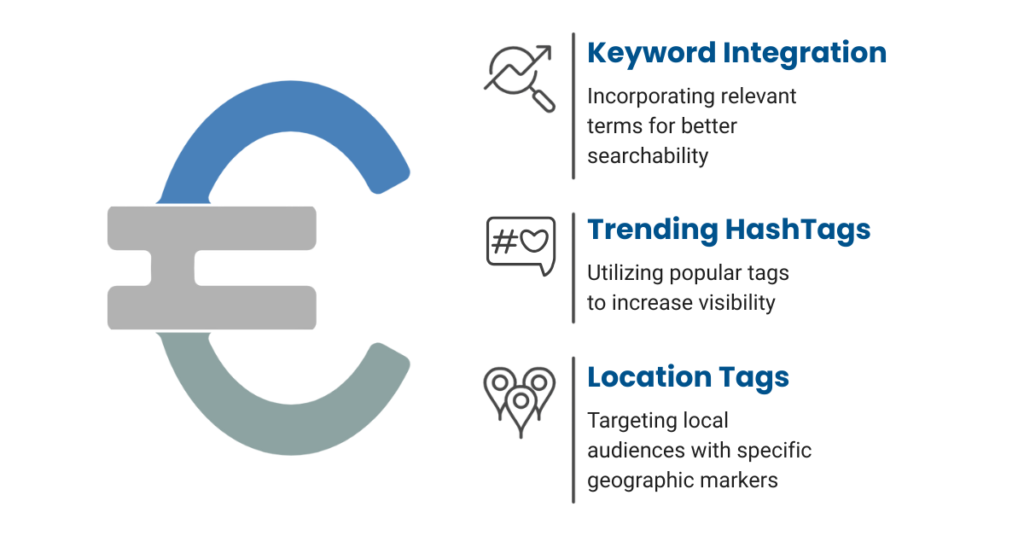
- Include relevant keywords in captions, hashtags, and alt text
- Use trending hashtags that match your niche
- Include location tags for local audience targeting
Example:
A post titled “SEO Best Practices for Digital Marketers” will reach more users than “SEO Tips for Websites” because it aligns with a more specific search intent.
Tips:
- Research trending keywords using tools like SEMrush or Ahrefs
- Limit hashtags to 5–10 relevant ones
- Use hashtags strategically in captions rather than overloading
Step 5: Craft Compelling Hooks
In the endless stream of social media posts, the first few seconds will determine whether someone will read your post or scroll past it. A strong hook is what gets people to pay attention right away. The first line of a video, caption, or carousel slide should make people want to learn more, solve a problem, make a big statement, or promise value right away. Strong hooks talk directly to what your audience wants or needs, which makes them want to read more or watch all the way through.
Hooks that show how important something is, make people think, give them new information, or promise answers tend to work very well. People want to read more right away when they see a hook like “You’re losing sales without knowing it” or “Stop posting content that no one cares about.” Hooks set the tone for the whole piece of content and make a strong first impression, which often makes more people read and interact with it.
Types of Hooks:
- Questions: “How to Use Instagram Shopping to Scale Up Business Online”
- Problem statement: “Stop using products that damage your skin!”
- Promises: “3 quick tips to grow your Instagram organically in 2025.”
Example:
“Glossier” reels often start with “Stop using products that damage your skin,” immediately engaging viewers and increasing watch time.
Tips:
- Keep hooks short, clear, and problem-focused
- Speak directly to your audience’s pain points or desires
- Test multiple hooks to identify what works best
Step 6: Deliver Value and Clarity
People who use social media People scroll quickly, so your content needs to be clear, short, and useful. Stay away from jargon and make hard subjects easy to understand.
How to Give Value:
- Give useful tips and information
- Fix a problem that is common in your field.
- Add short case studies or examples
- Use pictures to help people understand.
Example:
“HubSpot” breaks down marketing strategies in carousel posts, presenting one idea per slide. This approach increases engagement and positions them as industry experts.
Step 7: Leverage Visual Storytelling
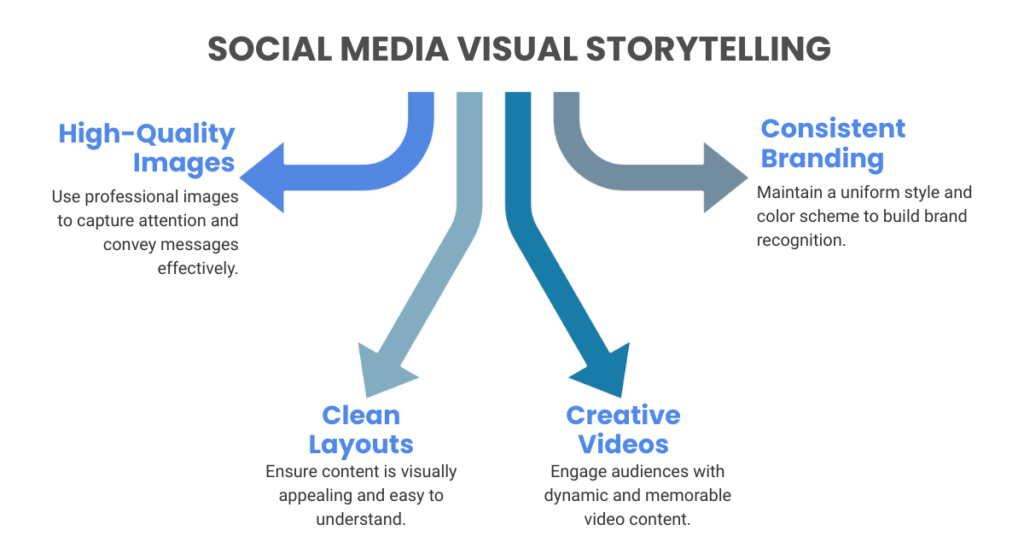
One of the best ways to market on social media today is through visual storytelling. Because people process visual information faster than text, the visual part of your content can affect how well your message gets across. Your content will stand out if you use high-quality images, clean layouts, professional graphics, creative videos, and well-designed carousels. Strong visuals grab people’s attention, show how you feel, point out important points, and make your brand more memorable.
Using the same colors, fonts, styles, and design elements in all of your marketing materials helps people remember your brand. Your content looks more credible and trustworthy right away when your visuals look professional and consistent. Your visuals, whether they are photos, infographics, animations, or short videos, should add to the story you are trying to tell, not take away from it. Visual storytelling makes your content more than just information; it makes it an experience. This makes people more interested and loyal to your brand.
Example:
Airbnb combines beautiful pictures of places to visit with short travel stories. The pictures grab people’s attention, and the story makes them feel something.
Tips:
- Keep the same style and color scheme throughout
- Motion graphics can help you draw attention to important points.
- Try using carousel posts to tell stories in steps.
Step 8: Getting people emotionally involved
People interact with things that make them feel something. One of the best ways to make your brand more human and connect with your audience is to use emotional marketing. You can show emotion through personal stories, experiences that others can relate to, changes in clients, motivational messages, or behind-the-scenes looks at your journey. People feel more connected to you when your content shows that you are real and open.
Content that is driven by emotion doesn’t always have to be serious or inspiring. Humor, curiosity, surprise, nostalgia, and empathy are all strong ways to make people feel things. When you talk to your audience’s feelings, whether they are angry, ambitious, hopeful, or happy, they see you as more than just a brand. They think of you as a person with values and experiences. This emotional bond makes people more likely to trust you, stay loyal, and buy from you.
Example:
“Coca-Cola” ads often use nostalgia and togetherness, which makes them easy to share. To build trust, small businesses can share stories about their customers’ journeys or what goes on behind the scenes.
Tips:
- Talk about experiences that people can relate to
- Use stories to make people feel what you feel.
- Use both pictures and words to make a stronger emotional impact.
Step 9: New Tactics and Trends for 2025
Social media constantly evolves. To stay ahead, brands must adopt innovative tactics:
- Interactive content: Polls, quizzes, and Q&A stickers. Example: Netflix polls for favorite shows on Instagram.
- AI-generated content: Speeds up content creation while maintaining quality.
- Short-form video optimization: TikTok and Instagram Reels under 30 seconds using trending sounds.
- AR filters: Engaging experiences on Instagram and Snapchat.
- Content clustering: A series of posts around a single theme improves authority and dwell time.
Step 10: Building a Strong Brand Voice
Every brand that does well has a voice that makes it stand out. Your brand voice should show your values, personality, and way of talking. Your tone should be the same on all of your platforms, whether it’s professional, inspirational, conversational, or authoritative. Keeping the same tone throughout your content helps people get to know you and trust you, which makes it easier for them to relate to what you say.
Tips for Developing Your Brand Voice:
- Be consistent across all platforms
- Reflect your brand values in every message
- Use storytelling to create emotional connections
- Encourage your audience to interact and share their experiences
- Experiment with formats like short videos, reels, or motion graphics to reinforce personality
Step 11: Consistency and Planning
Consistent posting builds trust and authority and improves algorithmic favorability. Use a content calendar to plan:
- Educational posts
- Entertainment posts
- Inspirational posts
- Promotional posts
Tips:
- Schedule posts during peak engagement times
- Maintain a consistent brand voice
- Use themes or campaigns to structure content
Step 12: Analyzing Performance to Improve Results
Analytics show you what is working and what needs to be fixed. You can find patterns in how well your content is doing by looking at metrics like reach, engagement, saves, shares, website clicks, and follower growth. Decisions based on data lead to results that are easier to predict and content that is easier to make. You can improve your strategy to make content that always does well once you know what topics, formats, posting times, and styles your audience likes best.
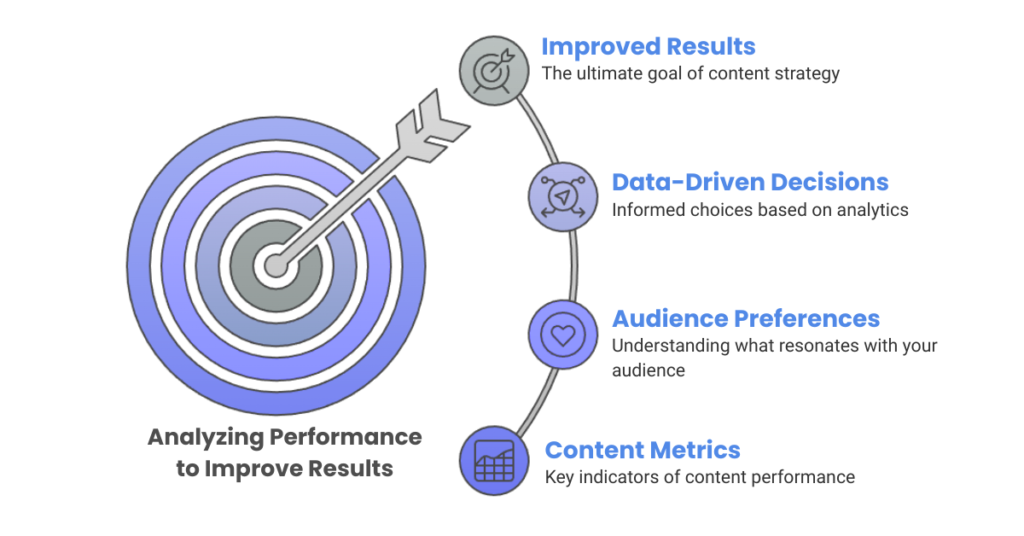
Tips for Using Performance Data Effectively:
- Track engagement metrics like likes, shares, comments, and click-through rates
- Analyze which content formats and topics perform best
- Test small changes and measure their impact
- Use audience feedback to guide content strategy
- Continuously optimize posts to increase reach, engagement, and conversions.
Step 13: Social Proof for Trust and Conversion
In the digital world, trust is a very valuable currency. Testimonials, case studies, reviews, and client success stories are all examples of social proof that can help your audience feel good about choosing your brand. People are more likely to believe that your service is good when they see proof that it works. Proof makes people less hesitant and gives them more trust, which makes it easier for potential customers to move forward.
Showing real changes, processes that happen behind the scenes, or results before and after also shows that you are real. People like it when you are open and honest, and they trust you more when you show them real stories, real outcomes, and real people behind the band. Social proof makes you look more trustworthy and pushes you to act. Share reviews, case studies, and content made by users.
Example:
“Glossier” features real customers using products in reels and carousel posts. This authenticity drives engagement and conversions.
Tips:
- Highlight real customer experiences
- Include before-and-after visuals
- Encourage customers to tag your brand
Conclusion
To make social media content that ranks, gets people interested, and leads to sales, you need to take a thoughtful approach that includes understanding, strategy, creativity, and consistency. It means knowing your audience well, making content with a purpose, optimizing for each platform, following SEO best practices, using memorable visuals, and communicating in a way that touches people’s hearts. When all of these things work together, your social media presence becomes not only visible but also powerful. You gain trust, build credibility, attract loyal followers, and finally get real conversions.
To be successful on social media, you don’t need to post more; you need to post smartly, strategically, and consistently. Following the tips in this guide will not only help your content reach more people, but it will also get them more involved and help you reach your long-term business goals. With time and effort, your online presence will become a valuable asset that boosts your brand and gets you real results.
How do I make my social media content more engaging?
To make your content more engaging, focus on creating strong hooks, using emotional storytelling, adding high-quality visuals, and keeping your message clear and valuable. Content that solves a problem or taps into emotions like inspiration, humor, or curiosity performs best.
How do I know what my audience wants?
Use platform analytics (Instagram Insights, TikTok Analytics, YouTube Studio), track past post performance, study your competitors, and create audience personas. This will help you understand your followers’ needs, problems, preferences, and content habits.
How do I use SEO to improve my social media reach?
Use relevant keywords in your captions, alt text, on-screen text, and bios. Add 5–10 targeted hashtags, include trending topics that match your niche, and optimize your content title. Social media search engines (like TikTok and Instagram) now show posts based on keyword relevance, not just hashtags.
How can I make my social media Content stand out?
Use strong hooks, clear messaging, high-quality visuals, and content that solves a specific problem. Unique formatting like carousels, short videos, and storytelling also makes your posts stand out in crowded feeds.